Bedding
A Timeless Duvet Cover Set: How to Coordinate Fabric, Closures, and Layers
The duvet cover is both a practical shield and the visual center of the bed. Choose it well, and fabric, fastening, and layers work together to make a bedroom feel calm, comfortable, and considered.
A bed can look finished without being elaborate. Often, the difference lies in a few quietly useful decisions: a fabric that suits the way you sleep, a closure that makes changing the cover less of a chore, and a restrained combination of sheets, pillows, and top layers. The duvet cover set is not merely a decorative wrapper. It touches the sleeper, protects an insert, and sets the room’s visual tone.
The word “set” can mean different things from one collection to another. It may include a duvet cover and matching pillowcases, or refer to coordinated pieces sold separately. Before choosing colors or counting thread, check exactly what is included, then consider how each part will work with bedding you already own. A durable, versatile arrangement is usually built by coordination, not by buying everything at once.
For readers exploring duvet covers from brands such as Coyuchi, the useful questions are much the same as for any bedding: What is the fiber? How is it woven? How will the fabric feel after regular laundering? Do the corners hold an insert securely? The answers matter more than a polished label or an impressive-sounding specification. A timeless bed begins with materials and details suited to everyday life.
Begin with the feel of the fabric
The first decision is tactile. A duvet cover is a large surface, and its character is shaped by both the fiber and the weave. Cotton is a familiar choice because it can be woven into fabrics with quite different sensations. Percale and sateen, for example, are not competing fibers; they are different ways of arranging yarns, and they produce different finishes.
Percale uses a straightforward, closely balanced weave that generally gives cotton a matte, crisp hand. It is often appealing to sleepers who like a fresh, light-feeling surface and a little structure. A percale cover can feel cool when first slipped into bed, while repeated washing tends to soften the cloth. Its clean appearance also suits a pared-back, hotel-inspired room, where texture and neat edges do more work than pattern.
Sateen arranges more yarns across the fabric surface, creating a smoother feel and a subtle sheen. It can drape more fluidly than percale, lending the bed a softer, more polished look. Those who prefer a sleek hand may find sateen inviting. The surface is not automatically warmer or cooler in every situation: fiber, fabric weight, room conditions, and the duvet insert all play a part. Still, weave is a helpful clue when choosing a feel.
Neither weave is the universal answer. Consider the room’s typical temperature, whether you tend to feel warm or cool at night, and the texture you enjoy against your skin. If possible, handle a fabric sample or compare familiar bedding before committing. Product descriptions can narrow the field, but the words “crisp,” “smooth,” and “soft” are not exact measurements. Your own preference is the final test.
Read beyond thread count
Thread count is often treated as shorthand for quality, but it cannot describe the whole fabric. It is one piece of information, and its meaning depends on how the threads are counted and on the quality and construction of the yarn. Fiber length, spinning, weave, finishing, and sewing all influence how a cover feels and wears. A well-made, lower-count percale can be more appealing to a particular sleeper than a denser fabric with a different hand.
Look for clear information about fiber content and care. “Cotton” identifies the basic fiber but does not tell you whether the cloth is crisp, brushed, or lustrous. “Organic” describes how the fiber was produced when supported by an appropriate certification; it does not, by itself, guarantee a specific feel or lifespan. If a certification is important to you, check what it covers and whether the individual item is certified.
Construction details deserve similar attention. A duvet cover’s seams, buttonholes, ties, and finishing are used repeatedly, particularly when the cover is washed and put back on. Clear laundering guidance helps you judge whether the routine suits your household. A fabric that looks lovely but requires care you cannot realistically provide may not be the most timeless choice for your home.
Closures: small hardware, daily consequences
The closure is easy to overlook while shopping and hard to ignore on laundry day. Duvet covers commonly close with buttons, snaps, ties, or a zipper. Each approach can work well when thoughtfully made; the right one depends on your habits and how much you value a discreet finish, straightforward handling, or a traditional detail.
- Buttons have an enduring, familiar look and can be replaced if one is lost, depending on the construction. They take a little time to fasten, and buttonholes should be checked for neat stitching.
- Snaps can make closing a cover quick and simple. Their usefulness depends on secure attachment and a placement that keeps the edge aligned.
- Zippers create a relatively continuous closure and can be convenient, though a zipper should move smoothly and be positioned so it does not irritate the sleeper or catch fabric.
- Interior ties are not a closure for the outer opening; they attach the duvet insert to the cover at its corners or along its edges. They are especially helpful when an insert tends to shift.
If you have ever pulled a duvet back into position in the middle of the night, you already understand the value of interior ties. Secure the insert at the corners, then fasten the cover and give the bed a gentle shake to distribute the fill. Some covers include ties at more than four points; others may not include them at all. Check the description before buying, and make sure the insert has loops if you want to connect the two components.
A good closure should suit the way you use the bed. For a household that changes linens frequently, easy operation may matter most. For a neatly tailored look, the opening’s placement and how it lies when closed may be more important. Whatever the mechanism, avoid forcing it when fabric is caught. A few seconds of care can help preserve both the fastener and the cloth.
The fit that keeps the bed composed
A duvet cover and insert need compatible dimensions. An insert that is substantially smaller than its cover may slump into empty corners; one that is too large can bunch or strain the seams. Check the dimensions of both pieces rather than relying on labels such as “queen” or “king,” which can vary by manufacturer and market. The same advice applies when replacing just one part of an existing set.
The insert’s loft also affects the result. A fuller duvet fills its cover more completely, while a lighter insert may produce a softer, more relaxed drape. There is no single correct silhouette. Aim for a cover that fits the insert without pulling at the closure or leaving large, unsupported pockets of fabric. Interior ties can help maintain even distribution, but they cannot fully compensate for a major size mismatch.
Before washing a new cover, note its stated dimensions and care instructions. Some fabrics may change slightly after laundering, and treatment varies by maker. Following the specified temperature and drying method is more reliable than assuming every cotton cover can be washed and dried the same way.
Build a set with coordination, not perfect matching
Matching bedding head to toe can look deliberate, but it is not necessary. A more flexible approach is to establish one visual anchor—the duvet cover—and bring in a few supporting tones or textures. A white or cream cover can work with colored pillowcases; a patterned cover may need only solid sheets and a quiet throw. Repeating one color in two places is often enough to make the arrangement feel connected.
Consider the room as a whole. Wall color, flooring, curtains, and the light that enters during the day all influence how bedding reads. In a bedroom with pronounced wood grain or patterned wallpaper, a simple cover can provide visual rest. In a quiet, neutral room, a small-scale print, an embroidered edge, or a textured coverlet can introduce definition without making the bed feel busy.
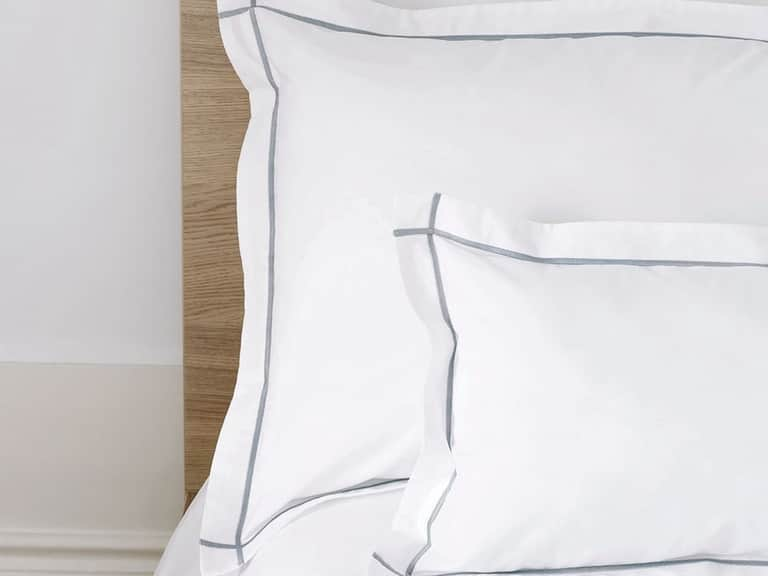
Pillowcases and shams can offer a subtle bridge between the duvet and the sheets. The Bovi Classic Hotel Pillowcases and Shams, for example, are made from cotton percale with a crisp feel and understated embroidered detailing. They can suit a restrained, tailored bedding scheme, particularly when paired with a duvet cover whose color or weave does not compete with the edge stitching. Their role is a finishing one; the overall combination should still be guided by the sleeper’s comfort and the care requirements of each piece.
A useful rule is to vary one quality at a time. Combine a smooth cover with a textured blanket, or a patterned duvet with plain pillowcases. Mixing several bold prints, strong colors, and pronounced surfaces at once can make a bed feel crowded. A limited palette does not have to be dull: differences in weave, scale, and finish give neutral shades depth.
Layer for comfort and changing seasons
A well-layered bed is adaptable. Start with a fitted sheet, add a flat sheet if you like one, then place the covered duvet on top. A lightweight blanket or coverlet can sit folded across the foot of the bed, ready for a cooler evening or removed when the room is warm. The point is not to accumulate layers but to make comfort adjustable without changing the entire bedding arrangement.
The duvet insert, rather than the cover alone, contributes much of the bed’s insulation. A breathable cover cannot make a very warm insert feel weightless, just as a thin cover will not make a low-loft insert suitable for every cold room. Think of the components as a system: cover, insert, sheets, room temperature, and personal preference. When seasons change, you may need to switch the insert or remove a blanket rather than replace the duvet cover.
A folded top layer also adds a visual line across the bed. Choose a color that appears elsewhere in the room, or keep it close to the duvet’s shade for a quiet tonal effect. In smaller spaces, a simple arrangement can feel less crowded and is easier to remake each morning. A timeless bed is not necessarily formal; it can be relaxed, provided its layers have a reason to be there.
Care is part of the design decision
Bedding is washed, folded, and put back into use. Care instructions are therefore not fine print; they are part of the product’s everyday performance. Follow the maker’s recommendations for water temperature, detergent, drying, and ironing. Avoid assuming that all natural fibers or all cotton weaves respond identically. Special finishes, dyes, and construction can affect the safest routine.
Wash bedding before first use if the care label permits and you prefer to do so. Use a washer large enough for the fabric to move freely, and avoid overloading it. Close buttons or zippers before laundering, and check that ties are secured so they do not twist around other items. Dry thoroughly according to instructions before storing or returning the cover to the bed.
Rotation can also help a set remain in regular use without being washed more often than necessary. If you own a second cover, alternating between them gives each one time away from the bed and makes a quick change easier. Store clean bedding in a dry, well-ventilated place, and keep the care label or product instructions accessible for later reference.
A practical checklist before you choose
Before settling on a duvet cover set, run through a short list. It turns a broad style decision into a handful of useful comparisons:
- Does the listed fiber and weave match the feel you prefer—crisp percale, smoother sateen, or another construction?
- Are the cover and insert dimensions compatible, including the insert’s loft and the cover’s stated measurements?
- What kind of opening does the cover use, and does it include interior ties to secure the insert?
- What pieces are actually included in the set? Are pillowcases included, and are shams sold separately?
- Can you follow the washing and drying instructions with the laundry routine you have?
- Will the color or pattern work with your existing sheets, pillows, and room finishes?
- Is there enough flexibility to change the look with a simple sheet or top layer rather than replacing the whole ensemble?
These questions do not make the choice less personal. They make it more likely that a beautiful cover will also be useful after the first impression fades.
The lasting appeal of a well-made bed
Timeless bedding is not defined by a particular shade of white, a hotel-like tuck, or a trend that claims to have solved sleep. It comes from consistency between appearance and use. The fabric feels right against the skin. The closure behaves as it should. The insert stays in place. The layers suit the climate and can be adjusted without fuss.
That is why a duvet cover set rewards attention to its less dramatic features. A crisp cotton percale may offer the clean, breathable feel some sleepers prefer; sateen may better suit someone drawn to a smoother surface and gentle sheen. Buttons, snaps, or a zipper can each serve well when chosen with care, while interior ties help keep the insert aligned. Coordinated pillowcases and a light top layer bring the arrangement together without requiring an exact match.
Choose for the bed you actually use, not an imagined room that must remain untouched. A considered duvet cover should be comfortable on an ordinary night, straightforward to care for, and flexible enough to live with the rest of the home. That combination—practicality with a little quiet polish—is what allows a bedding set to remain relevant long after the season’s decorating ideas have passed.