Bedding Guide
How to Choose a Down Comforter Weight for Year-Round Sleep
A comforter labeled “winter” may sound like the obvious choice for cold weather. But the warmth you need depends on more than the calendar: bedroom temperature, personal sleep habits, fill construction and the bedding beneath you all matter. Knowing how these factors work can help you choose a down comforter that feels comfortable through the night—and decide whether one weight can serve all year.
Down has an unusual talent for making warmth feel light. Its clusters trap air, creating loft that insulates without the dense, heavy sensation of some other fills. That quality has made down a familiar comforter material across a wide range of climates and seasons. Yet “down” alone doesn’t tell you how warm a comforter will feel. Two products with similar labels can differ substantially in fill amount, fill power, construction and shell fabric.
The central question is not simply whether a comforter is designed for summer or winter. It is whether its insulation matches the conditions where you sleep and the way your body responds to warmth. A person in a cool, drafty room who tends to feel cold may welcome a winter-weight comforter. Someone who sleeps warm in a heated bedroom may find that same model uncomfortable, even in January. Season is a starting point; your sleep environment is the better guide.
What comforter “weight” actually means
Retailers commonly describe down comforters as summer, lightweight, year-round, all-season or winter weight. These are useful broad categories, not universal technical standards. One manufacturer’s year-round comforter may feel warmer than another’s because the fill, shell, pattern of stitching and intended use differ. A label can narrow your search, but it cannot replace the product specifications.
A comforter’s warmth is influenced by how much insulation it contains and how effectively that insulation holds air. The amount of down inside is called fill weight, usually stated as a mass for the entire comforter or for a particular size. Fill power describes the loft produced by a given amount of down. Neither number alone fully determines comfort. Consider them together, then look at construction and the maker’s warmth guidance.
This distinction is important because high fill power does not automatically mean “hotter.” Higher-fill-power down can achieve a given level of loft with less material, which may result in a lighter comforter. A lower-fill-power comforter might contain more down by weight to create comparable loft. The total warmth depends on the complete design, including the quantity and distribution of the fill—not simply the most impressive number on a label.
Fill power: loft, not a thermostat
Think of fill power as a measure of loft efficiency. In general, higher fill power means the down clusters expand more and occupy more space relative to their weight. Loft helps create pockets of still air, and those pockets contribute to insulation. For a given fill weight, a higher-loft fill can produce a puffier comforter. But the number does not say exactly how warm you will feel in bed.
When comparing models, treat fill power as one piece of evidence rather than a warmth rating. A comforter with a high fill-power figure may be designed for a light, airy feel; another with a lower figure could have more total fill and be intended for colder conditions. Compare products in the same size where possible, because a king comforter naturally requires more fill than a twin. Check whether specifications describe fill weight per size, total fill weight or another measure.
Manufacturers may also use different testing and labeling practices. If two figures appear close, the difference may be less useful to your decision than whether the comforter is categorized for summer or winter, how it is constructed, and how it performs in the room where you will use it. When the product information is unclear, ask for the fill weight by size and the maker’s intended warmth range.
Fill weight: how much down is inside
Fill weight is often more directly connected to the amount of insulation in a comforter, but it still requires context. A heavier fill does not guarantee a warmer night if the comforter is poorly matched to the bed, if the fill shifts, or if the room is already warm. Weight also affects drape and feel. Some sleepers like a substantial layer; others prefer a comforter that seems to float above them.
Do not compare fill weights without checking the size and construction. A quoted weight for a queen comforter should not be compared as though it were interchangeable with a king. Baffle dimensions, comforter measurements and the type of down can also influence how much fill is needed. The practical goal is not to identify the biggest number. It is to understand how the complete comforter balances insulation, coverage and the sensation of weight.
Summer, year-round and winter weights
A summer down comforter is generally intended to provide a light layer of insulation. It can suit warm bedrooms, hot sleepers or people who keep a separate blanket nearby for occasional cooler nights. Its appeal is not that it delivers no warmth; down is insulating by nature. Rather, the design usually aims to feel less substantial than a winter model.
A year-round comforter aims for a middle ground. It may work well in a home with moderate indoor temperatures and in a bedroom that does not swing dramatically between seasons. For many households, it is the most straightforward single-comforter option. Its limits become apparent when indoor conditions are unusually warm or cold, or when the sleeper’s comfort changes markedly with the season.
A winter down comforter is designed to provide more insulation, often through a higher fill amount, a loftier construction or both. It can be useful in cold rooms, older homes with temperature variation, or for people who consistently feel chilled at night. In a well-heated bedroom, however, a winter-weight comforter may feel too warm. More insulation is not always more comfort; overheating can interrupt sleep just as an inadequate layer can.
These categories are not strict temperature guarantees. There is no single bedroom reading at which everyone should switch from summer to winter weight. Room humidity, drafts, mattress and protector materials, sleepwear and the number of people sharing the bed all affect the result. The best label is the one supported by the specifications and by your own experience over several nights.
Start with the room, not the forecast
Outdoor weather can be a poor predictor of what happens beneath the covers. A well-insulated home may stay relatively stable during a cold spell; a room above a warm apartment or near a heating vent may remain warm through winter. Conversely, a bedroom with single-pane windows, drafts or uneven heating can feel cold even when the rest of the home is comfortable.
If you are unsure, observe the bedroom at bedtime and again near morning across different parts of the year. A basic indoor thermometer can help reveal patterns, but the point is not to chase a precise universal target. Note whether the room cools overnight, whether heating or air conditioning cycles, and whether you wake feeling warm, cold or comfortable. A week of simple observations is often more useful than guessing from the season name on a product page.
- Warm, stable room: Consider a summer-weight or lighter year-round comforter, especially if you sleep warm.
- Moderate room with modest seasonal change: A year-round comforter may offer a workable balance.
- Cold, drafty or unevenly heated room: A winter-weight option may be worth considering if you tend to feel cold.
- Large temperature swings: A lighter comforter with a separate blanket can provide more flexibility than one very heavy layer.
Your sleep warmth is personal data
Some people routinely push covers away; others seek an extra layer before the room feels cold to anyone else. Neither pattern is a flaw to correct. It is a useful clue. If you wake overheated, sweat under the comforter or uncover yourself repeatedly, the insulation may be excessive for your conditions. If you wake cold despite adequate sleepwear and a comfortable room, a warmer comforter—or a more adaptable layering arrangement—may help.
A shared bed adds another variable. Two people can have different comfort needs while sleeping under the same cover. Before choosing a heavy comforter to satisfy the colder sleeper, consider whether the warmer sleeper will be comfortable beneath it. Separate blankets, a lighter duvet with individual throws, or a layered arrangement can sometimes solve the problem more effectively than increasing the warmth of the main comforter.
Changes in health, medication, age, hormonal patterns or activity can also influence how warm or cold someone feels. A comforter choice is not a medical solution, and persistent night sweats or unusual temperature sensitivity may warrant discussion with a healthcare professional. For ordinary variations, though, adjusting bedding is a practical, low-effort place to begin.
Construction shapes the experience
The way a comforter holds its fill affects whether warmth feels even. In a baffle-box construction, fabric walls between the top and bottom layers create three-dimensional compartments. These baffles give down room to expand and help limit migration from one area to another. The result can be more consistent loft across the comforter, although baffle design and workmanship vary.
A sewn-through construction joins the upper and lower shell directly at intervals. This creates compartments and helps secure the fill, but the stitched lines can form thinner areas than the filled sections. That does not make sewn-through designs automatically unsuitable: the approach can suit lighter comforters and particular design goals. It does mean that construction should be considered alongside the warmth rating, especially when choosing a comforter for a cold room.
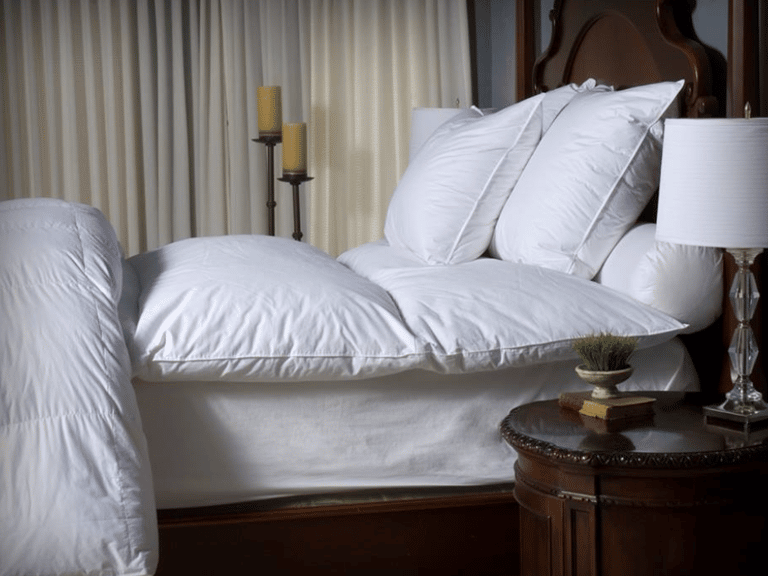
Look for information about how the fill is distributed, whether the comforter has corner loops to attach to a duvet cover, and whether the size provides enough coverage for your mattress and preferred drape. A cover can help protect the insert and may add a small amount of warmth, depending on its fabric and construction. Treat that effect as part of the full bedding system, not as a dependable substitute for selecting an appropriate comforter weight.
Shell fabric and the rest of the bed
The shell—the fabric enclosing the down—affects breathability, hand feel and the sound or movement of the comforter. Cotton is a common choice, while other materials may offer a different texture or performance. A tightly woven shell helps contain down, but “breathable” is not a simple guarantee of cool sleep. The warmth you experience comes from the combined effects of fill, shell, duvet cover, sheets, mattress and room conditions.
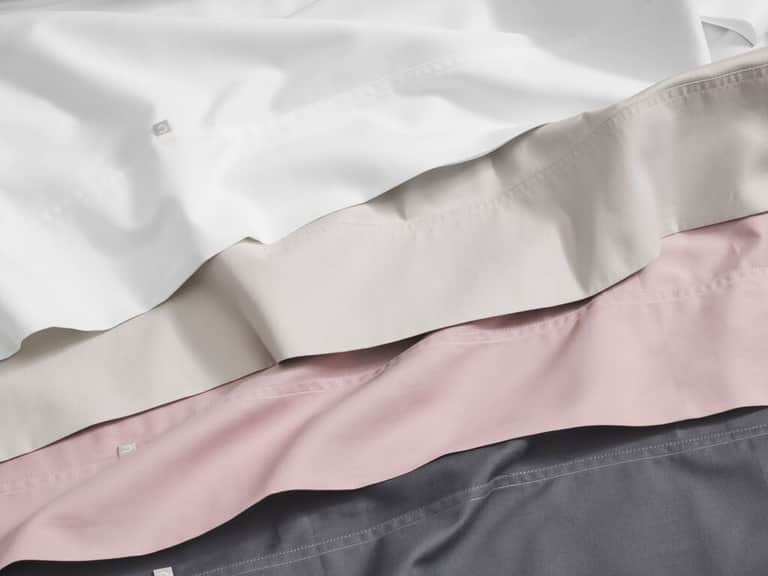
Sheets can subtly change the overall feel. A crisp, airy percale sheet may feel cooler to the touch than a smoother, more draped sateen, though the difference is only one part of the sleep environment. A thick mattress protector, flannel sheets, sleepwear and blankets can all add warmth. If a comforter feels too hot, review the layers beneath and above it before assuming the fill rating alone is responsible.
A duvet cover also provides a convenient way to refresh the bed and protect the comforter from routine soil. Follow the care instructions for both insert and cover. Down comforters often need less frequent cleaning than sheets, and unnecessary washing can shorten their useful life. Airing the comforter, using a cover and addressing small spills promptly can help keep maintenance manageable. Always rely on the manufacturer’s directions for cleaning and drying.
One comforter or a seasonal pair?
A single year-round comforter is appealing for its simplicity: one insert to store, one layer to make the bed and fewer seasonal decisions. It is often a sensible choice in a climate with moderate temperatures or a home with consistent heating and cooling. The trade-off is compromise. A middle-weight design may feel slightly too warm at one time of year and slightly too light at another.
A seasonal pair—a lighter comforter for warm months and a heavier one for cold months—offers a closer match to changing conditions. It also requires storage space, care and an additional purchase. A third route is to choose a lighter year-round comforter and keep a washable blanket within reach. This flexible arrangement can serve bedrooms with variable temperatures and households in which sleepers have different preferences.
The right approach depends on how much the room changes, how sensitive you are to warmth, and whether you value simplicity or adjustment. There is no universal rule that owning two comforters is better. Nor is “year-round” a promise that one model will suit every sleeper in every climate. A good purchase is the one that provides practical comfort under your actual conditions.
A practical comparison checklist
Before choosing a down comforter weight, compare the details in this order:
- Identify your pattern. Do you usually wake warm, cold or comfortable? Think about more than one night.
- Assess the room. Consider overnight temperature, drafts, heating, air conditioning and seasonal variation.
- Read the warmth category. Use summer, year-round and winter as broad guidance, not as fixed standards.
- Compare fill power and fill weight together. Check the comforter size and make sure you understand what each figure describes.
- Inspect construction. Baffles, sewn-through compartments and fill distribution influence loft and consistency.
- Account for other layers. Sheets, covers, blankets, sleepwear and mattress protectors can change the overall warmth.
- Check care and return terms. A comforter is a long-term bedding layer; confirm how it should be maintained and what options exist if the weight is unsuitable.
Common mistakes to avoid
The first is choosing by season alone. A winter label does not know whether your bedroom is heated, whether you sleep warm or whether you share the bed. The second is treating fill power as a direct measure of temperature. It describes loft performance, not a guaranteed warmth level. Third, comparing fill weight across different comforter sizes can lead to a false conclusion about which design is more insulating.
Another mistake is assuming heavier always means better. A comforter that is too warm may lead to interrupted sleep, while excess weight can feel restrictive to someone who prefers a light cover. Finally, do not overlook the bedding around the comforter. A warm duvet cover, flannel sheets and several blankets can transform how a moderate-weight insert feels. Evaluate the whole bed, not a single specification in isolation.
The bottom line
Choosing the right down comforter weight is an exercise in matching insulation to a real environment. Summer weight generally suits warmer rooms and sleepers who prefer a lighter layer. Winter weight can be appropriate for cold bedrooms and people who tend to feel chilled. Year-round weight offers a practical middle ground when indoor conditions are fairly steady.
Use fill power to understand loft, fill weight to understand how much insulation is present, and construction details to assess how that fill is held in place. Then bring the numbers back to the bedroom: its temperature, its layers and the person sleeping in it. The most comfortable comforter is not necessarily the fullest, the heaviest or the one with the most impressive specification. It is the one that lets warmth settle into the night without becoming the story of it.